News Center
Angular Contact Ball Bearings: 15°, 25°, or 40° — Which Contact Angle Fits Your Application?
2025-07-01
Contact angle is a critical parameter when selecting angular contact ball bearings for various precision and general-purpose equipment. A larger angle means higher axial load capacity; a smaller angle enables higher speeds. Selection is essentially a trade-off between speed priority and load priority.
1. 15° Contact Angle (Suffix C) — Speed First
Lowest axial load capacity, highest limiting speed, minimal heat generation. Ideal for ultra-high-speed applications.
Applications: High-speed machine tool spindles (internal grinders, external grinders, high-frequency motor spindles), high-frequency motors, high-speed centrifuges, aircraft engine accessory drive systems, ultra-precision machining equipment.
Tip: Choose 15° when speed is critical and axial loads are light.
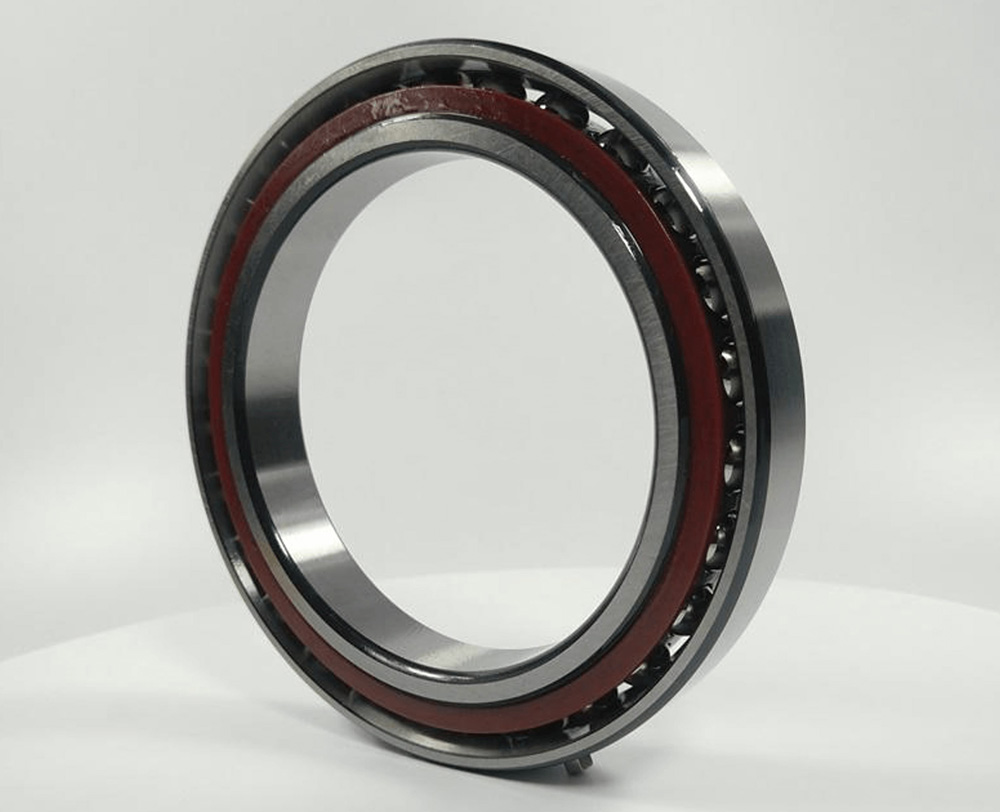
2. 25° Contact Angle (Suffix AC) — The Balanced Choice
Best compromise between axial load capacity and speed performance. The most common specification in precision spindle bearings.
Applications: General-purpose machine tool spindles (lathes, milling machines, machining centers), industrial robot joints (wrist and shoulder joints), precision positioning devices and rotary tables, CNC engraving machines, woodworking machinery spindles, high-speed textile spindles.
Tip: Choose 25° when both high speed and significant axial loads are required.
3. 40° Contact Angle (Suffix B) — Load First
Highest axial load capacity, suitable for heavy axial or impact loads, but with the lowest limiting speed.
Applications: Heavy-duty low-speed machine tool spindles (heavy lathes, roll grinders), centrifugal separators and pumps, metallurgical and mining equipment (crushers, vibrating screens), air compressors and various transmissions, construction machinery travel drives, wind turbine gearboxes, marine propulsion systems.
Tip: Choose 40° when axial load is the primary concern and speed is not critical.
Important Reminder
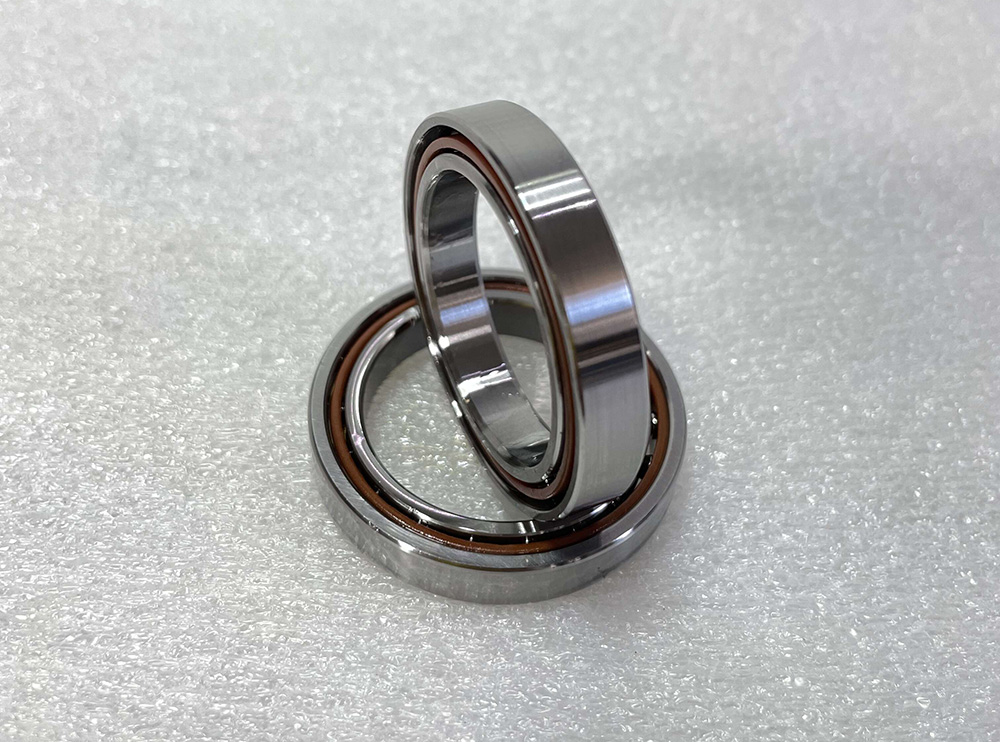
Single-row angular contact ball bearings must be mounted in pairs (DB back-to-back, DF face-to-face, or DT tandem) to balance the internal axial force generated under radial loads.
For selection assistance, please contact our technical team.
Contact Information:
For more information on angular contact bearings and their applications, please contact our technical support team at [email protected].