News Center
Angular Contact Ball Bearings: Industrial Applications
2026-09-11
What separates angular contact ball bearings from other bearing types is the contact angle. This angle usually falls between 15° and 40°, and it is what allows these bearings to carry axial thrust at speeds that would quickly damage a standard radial bearing.
The following sections look at how angular contact ball bearings are used in five common industrial areas.
1. CNC Machine Tools and Precision Spindles
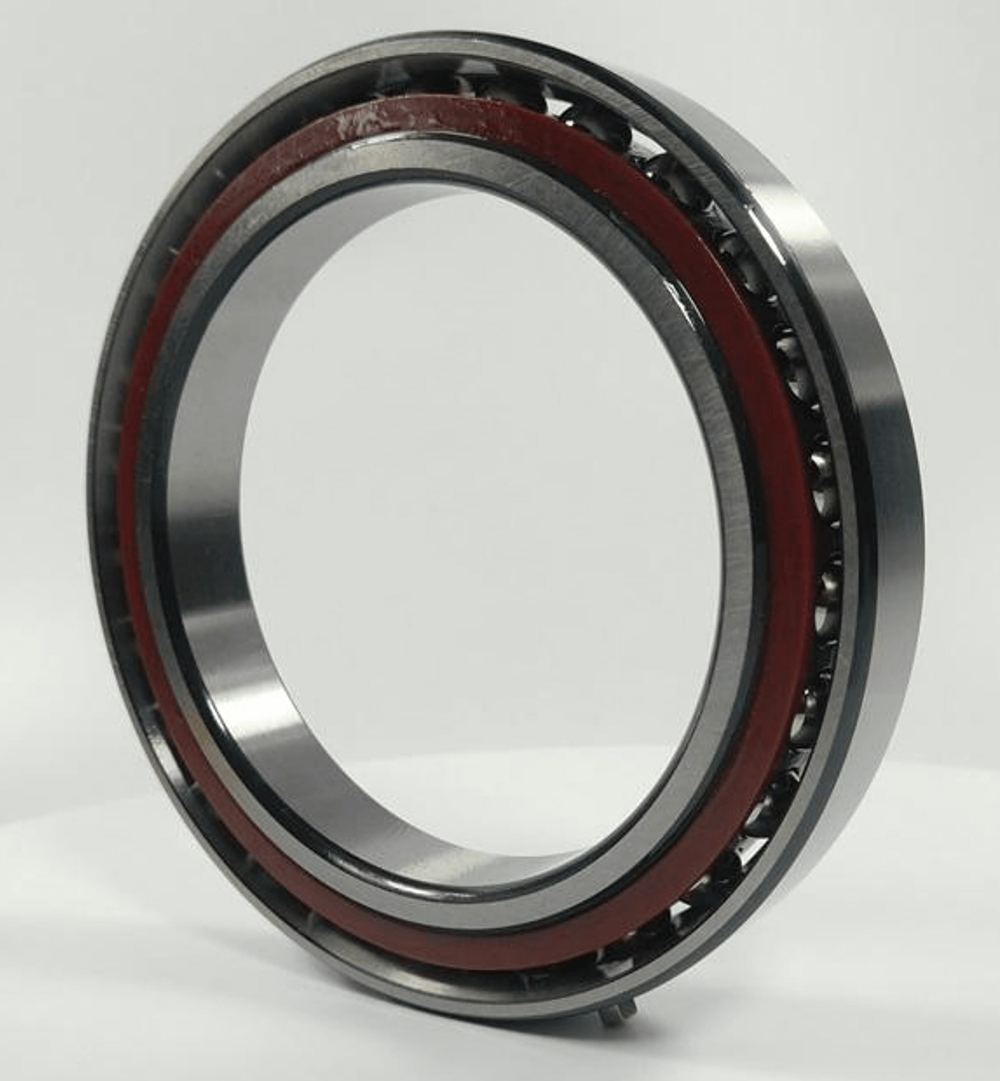
In high-speed machining, spindle deflection directly affects surface finish. Angular contact ball bearings mounted back-to-back (DB) or face-to-face (DF) help increase system rigidity. When manufactured to P4 or P2 (ABEC-7/9) tolerances, they help keep spindle runout in the sub-micron range, which is often required for mirror-finish machining of hardened steels. At spindle speeds above 25,000 RPM, cage design also matters — phenolic resin and brass cages are commonly chosen to help maintain stable thermal behavior.
2. Aerospace and Turbomachinery
Aerospace applications leave little room for failure. In jet engine accessory drives and helicopter transmission systems, angular contact ball bearings are often built with silicon nitride (Si₃N₄) ceramic balls. Ceramic balls weigh roughly 60% less than steel balls, which reduces centrifugal force and heat at high speeds. They also resist adhesive wear if lubrication is briefly interrupted, and they perform well across a wide temperature range.
3. Automotive Transmissions and EV Drivetrains
Electric vehicles put gearbox bearings under heavy shock loads during rapid torque delivery. Angular contact ball bearings with a 25° or 40° contact angle are commonly used to handle the thrust forces from helical gears. In recent years, PEEK (polyetheretherketone) cages and low-viscosity greases have helped reduce frictional torque, which contributes to better drivetrain efficiency and longer battery range.
4. Industrial Robotics and Precision Automation
For robotic arms doing repetitive pick-and-place work, positioning repeatability is critical. Factory-preloaded angular contact ball bearings remove internal radial and axial clearance, which helps achieve near-zero backlash. This keeps joint positioning consistent over millions of cycles, even when payloads vary.
5. Power Generation and Renewable Energy
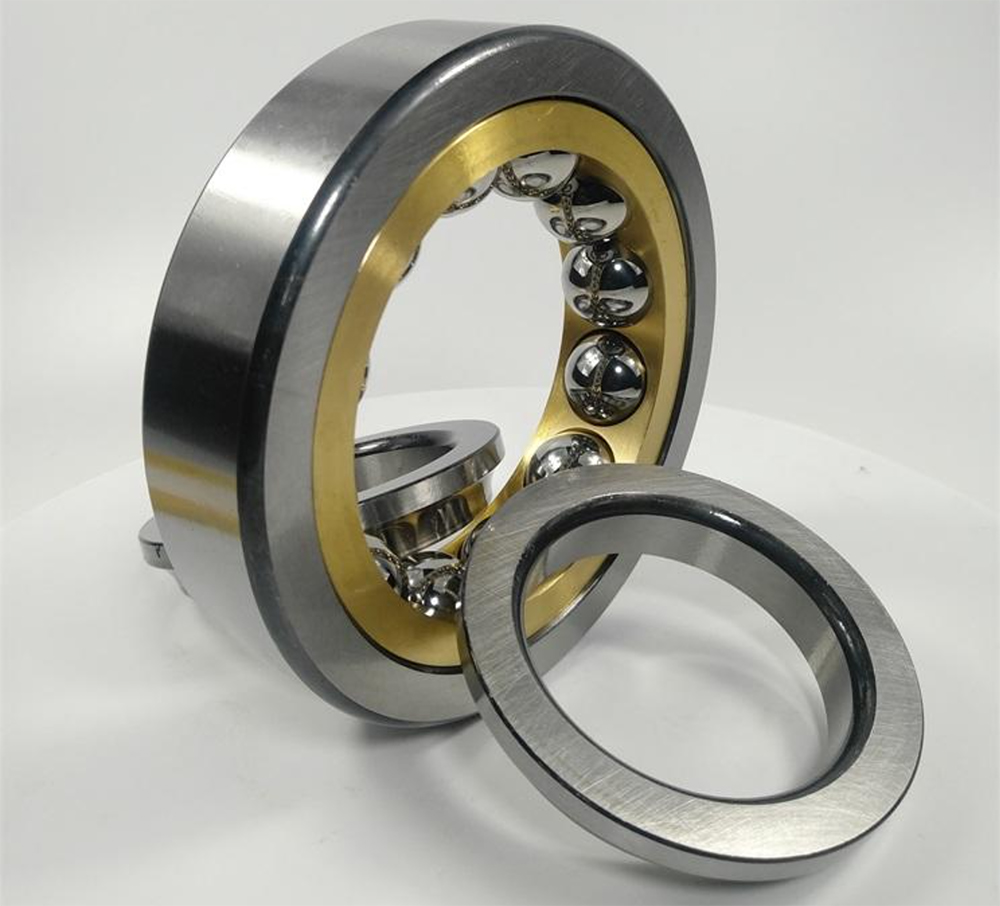
Wind turbine pitch systems and high-speed industrial generators often run in harsh environments with limited maintenance access. In variable-frequency drive applications, stray current can cause electrical erosion on bearing surfaces. Ceramic rolling elements or insulating coatings are common ways to address this, while black oxide and DLC (diamond-like carbon) coatings are used mainly for wear and corrosion protection.
Points to Keep in Mind
Choosing an angular contact ball bearing is not just a matter of matching a part number. Contact angle, cage material, preload level, and surface treatment all need to fit the thermal and load conditions of the specific application. It is worth involving your bearing supplier's engineering team early in the design stage, as this usually makes a noticeable difference to service life and reliability.
At Shandong DSYC Bearing Co., LTD, we supply angular contact ball bearings in precision grades P0 through P2, in bearing steel, stainless steel, and ceramic. If you have specific requirements on contact angle, cage type, preload, or surface treatment, our engineering team is glad to help you match the right bearing to your application.