News Center
Angular Contact Ball Bearings: What Do the Arrow and "V" Marks Mean
2026-08-12
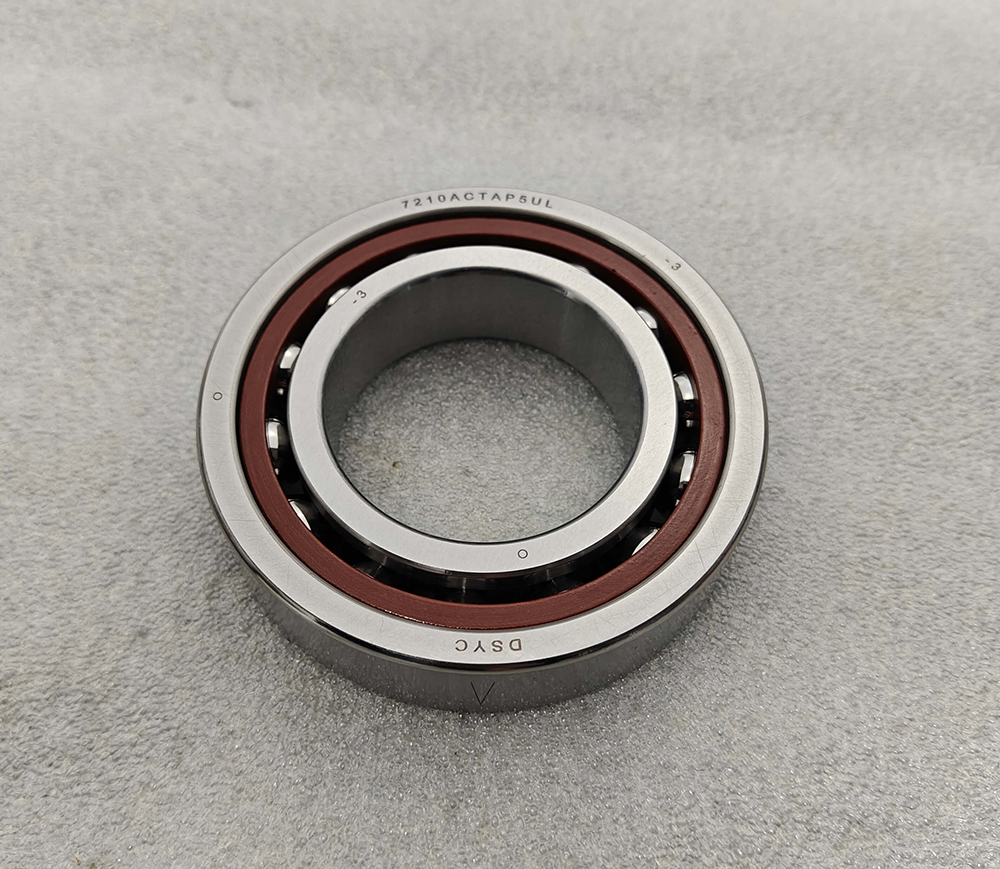
If you've ever handled an angular contact ball bearing, you may have noticed a small arrow or a "V" shaped mark on its outer ring. These are not random stamps — they serve one critical purpose: to tell you how to install the bearing correctly.
Why Direction Matters?
Unlike deep groove ball bearings, angular contact bearings are designed with a built-in contact angle, giving them a "preferred" direction for supporting axial (thrust) loads.
Install it backward, and the bearing will:
• Fail to support the intended load
• Generate excess heat and noise
• Suffer premature failure — sometimes cutting service life by 50% or more
For this reason, manufacturers provide clear visual marks to guide installers.
What Do the Marks Indicate?
The marking indicates which direction the bearing can accept axial load. Different brands use these symbols in slightly different ways. Here is a quick reference:
• SKF single A-type bearings (arrow + "THRUST" text): the arrow points in the direction the outer ring accepts axial load.
• SKF matched bearing sets ("V" mark): the "V" indicates the direction of axial load on the inner ring.
• NSK universal combination bearings ("V" mark): the tip of the "V" points in the direction of axial load on the inner ring.
• Always consult the specific manufacturer's technical documentation before installation.
Do All Angular Contact Bearings Have These Marks?
No. It depends on the bearing type:
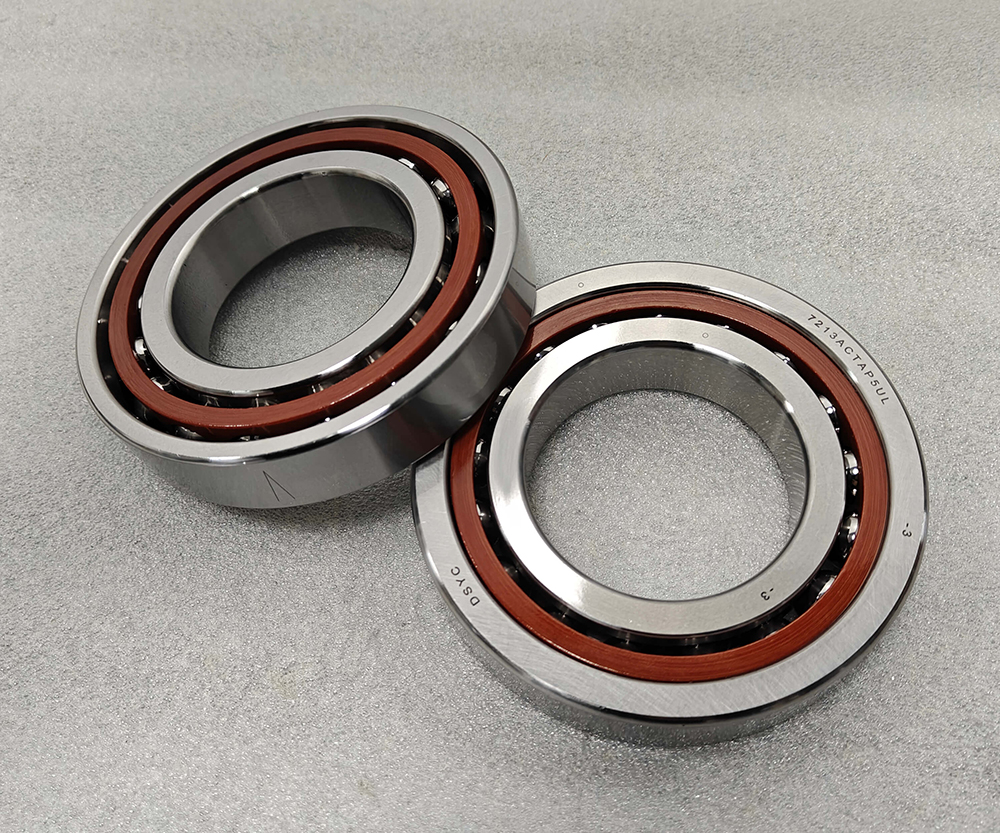
• Universal combination bearings — Yes, typically marked. These can be used in multiple arrangements, so the marking ensures correct orientation.
• Factory-matched sets — Yes, typically marked. The marks must be aligned to preserve the factory-preset preload.
• Standard single-row bearings — Often unmarked. These are designed for specific installations, and orientation is identified by the raceway geometry.
Quick Installation Checklist
1. Inspect the bearing for arrows, "V" marks, or "THRUST" text.
2. Identify the manufacturer and their specific marking convention.
3. Determine your axial load direction.
4. Orient the bearing accordingly.
5. For matched sets, align the "V" marks as specified.
6. When in doubt, consult the bearing supplier.
Summary
• Purpose of the marking: indicates correct installation direction for axial load.
• Are all bearings marked? No — only universal and factory-matched types typically carry them.
• Do arrow and "V" mean the same thing? Not always — it depends on the brand.
• Consequence of ignoring the mark: overheating, noise, and premature failure.
The small arrow or "V" on an angular contact bearing is not a suggestion — it is an instruction. Taking time to understand it for your specific bearing brand is one of the simplest ways to ensure reliable operation and long service life.
Need help with bearing selection or installation? Contact our engineering team for expert guidance.