News Center
How to Extend Vacuum Pump Bearing Life: 6 Maintenance Essentials
2026-09-24
The service life of vacuum pump bearings often depends less on the bearing itself and more on how it is maintained. Industry data shows that over 70% of premature bearing failures stem from improper maintenance rather than material or design defects. The following six areas are central to extending bearing life. For specific temperature thresholds, vibration standards, and lubrication intervals, please refer to the equipment manufacturer's manual.
1. Daily Inspection
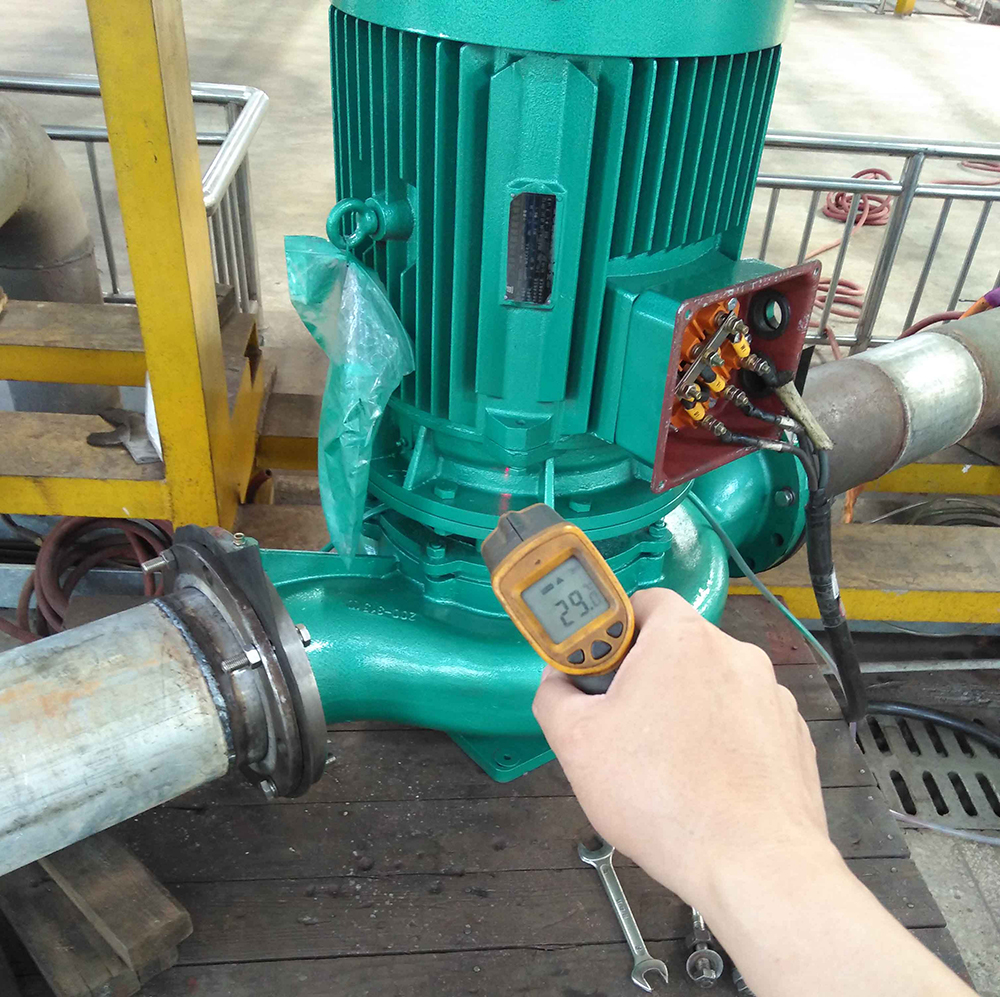
Use an infrared thermometer to check the bearing outer ring temperature daily. Oil-lubricated bearings normally run at 50–70°C, while dry bearings stay below 80°C. A temperature change of ≥10°C/hour requires an immediate shutdown for inspection. Collect vibration data weekly and reference ISO 10816 to assess health status; when vibration severity exceeds 4.5 mm/s, an in-depth inspection is recommended. Use a stethoscope to identify metal friction sounds, periodic impact sounds, and continuous squealing.
2. Scheduled Maintenance
For oil-lubricated bearings, sample and test viscosity, acid value, and metal particle content every 3 months, with cleanliness referencing NAS 1638 Class 6. For grease-lubricated bearings, replenish grease every 6 months, with fill volume controlled at 30%–50% of free space. Inspect O-rings, lip seals, and mechanical seals quarterly; in corrosive conditions, the interval can be shortened to 3 months.
3. Lubrication Management
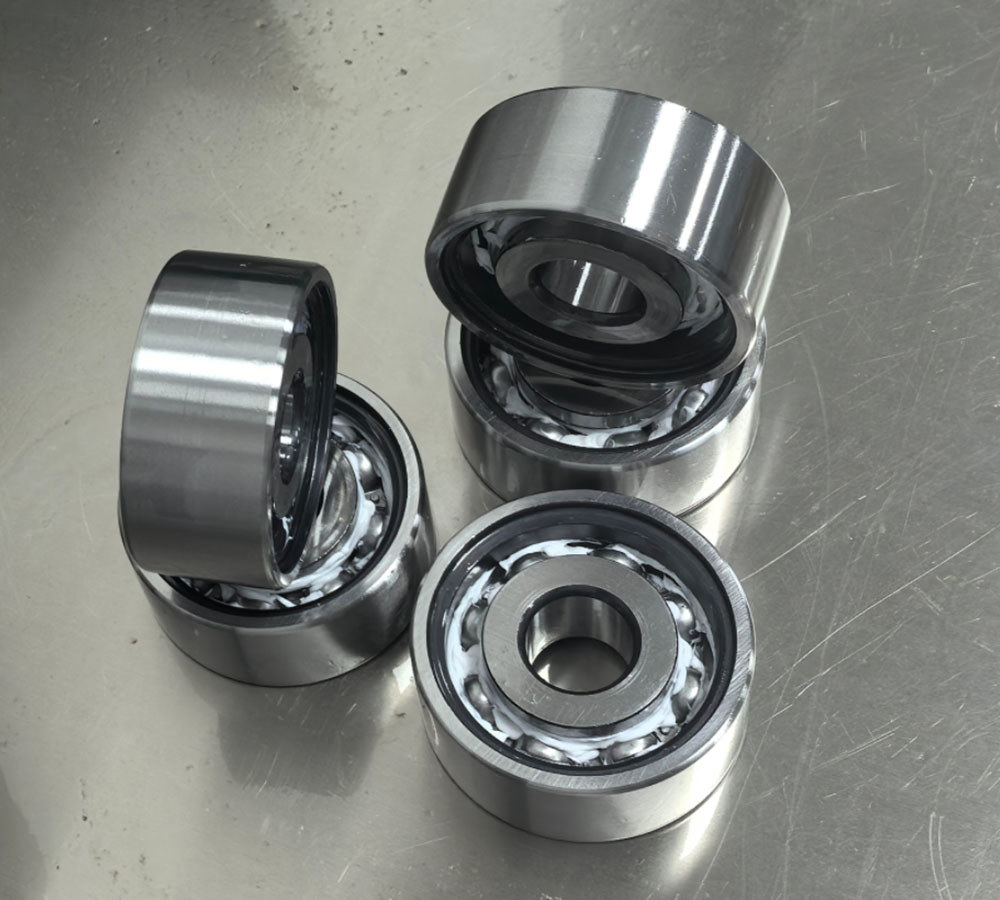
For high-temperature conditions (>100°C), use synthetic oil; for low-temperature scenarios (below -20°C), use low-pour-point grease. In semiconductor applications, use perfluoropolyether (PFPE) lubricants. Light-load lubrication intervals can be extended to 6 months, while heavy-load conditions should be shortened to 1 month.
4. Preventive Maintenance
Deploy combined vibration, temperature, and current sensors to build a bearing health fingerprint database. When early raceway fatigue occurs, acoustic emission energy in the 8–12 kHz range rises significantly, triggering an early warning.
5. Storage and Installation
Store bearings horizontally in a dry environment (humidity <60%), avoiding direct contact with the floor or walls. For long-term storage (>6 months), periodically rotate the shaft sleeve 1/4 turn. Use hydraulic or mechanical pressing methods, and control shaft alignment error to within 0.05 mm after installation.
6. Personnel Training
Develop maintenance SOP manuals, organize annual training on vibration analysis and oil testing, and build a failure case database to reduce reliance on individual experience.
If your vacuum pump bearings show abnormal temperature rise, excessive vibration, or frequent replacement, contact our technical team for selection advice and maintenance solutions.