News Center
How to Prevent Heat Treatment Distortion in Angular Contact Ball Bearings
2026-10-21
Heat treatment is a metalworking process in which a material is heated, held at temperature, and then cooled in the solid state to obtain the desired microstructure and properties. It is an important step in part production, effectively improving hardness, strength, and overall service quality.Angular contact ball bearings, as common industrial components, also undergo heat treatment. However, heat treatment involves thermal stress and transformation stress—complex internal stresses that can cause angular contact ball bearings to distort. In addition, mechanical impact during heat treatment can also deform the bearings, affecting both appearance and performance. The following discusses how to prevent heat treatment distortion in angular contact ball bearings.
1. Proper cooling method
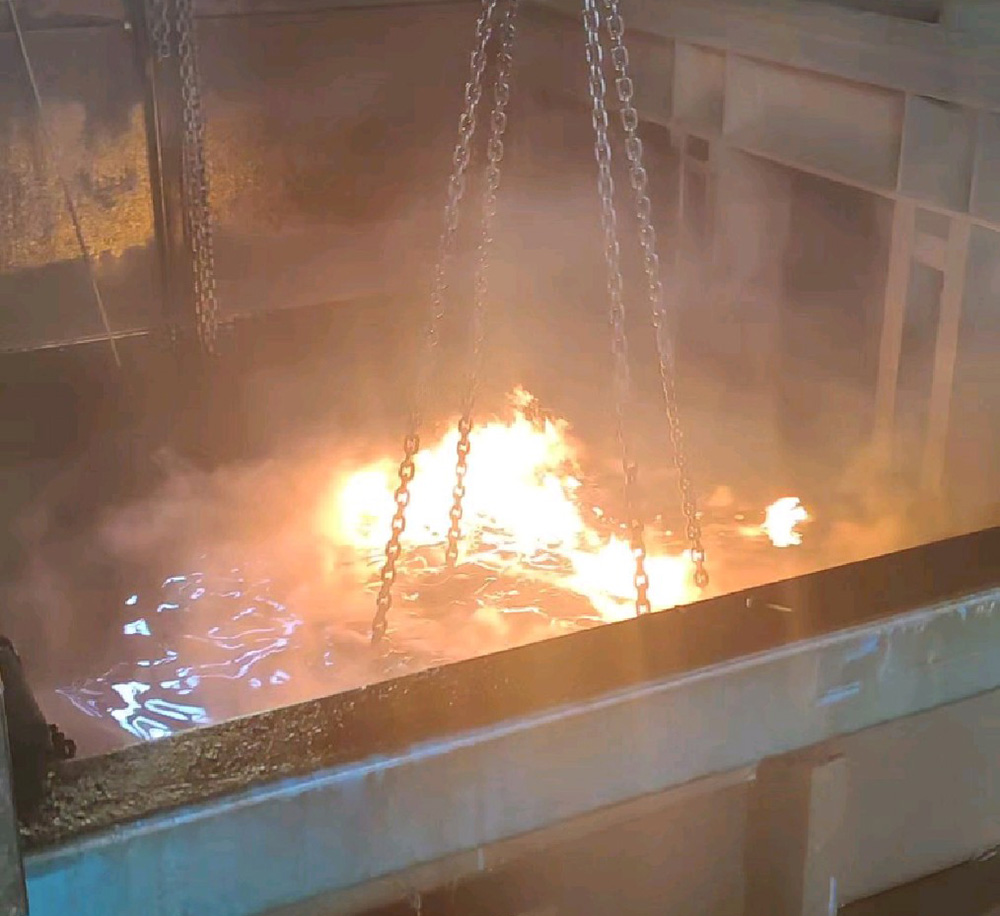
The cooling process after quenching has a significant influence on distortion. Hot-oil quenching produces less distortion than cold-oil quenching, with the oil temperature typically controlled at 100 ± 20 °C. The cooling capacity of the oil is also critical. Both the stirring method and stirring speed during quenching affect distortion. The faster the cooling rate and the less uniform the cooling, the greater the stresses generated and the greater the bearing distortion. Where the hardness requirements for angular contact ball bearings permit, pre-cooling should be used wherever possible. Step quenching (martempering) can significantly reduce the thermal and transformation stresses generated during quenching and is one of the effective methods for reducing bearing distortion. For angular contact ball bearings with higher precision requirements, austempering can significantly reduce distortion.
2. Suitable quenching medium
Where the same hardness requirements can be met, an oil-based medium should be used wherever possible. Experiments and practice have shown that, all other conditions being equal, oil-based media cool more slowly, while water-based media cool relatively faster. Moreover, compared with oil-based media, water temperature variation has a greater effect on the cooling characteristics of water-based media. Under the same heat treatment conditions, the distortion of bearings quenched in oil-based media is relatively smaller than that in water-based media.
3. Reasonable bearing structure (prevention at the design stage)
During cooling after heat treatment, thin sections always cool faster and thick sections slower. Where actual production requirements permit, differences in wall thickness in angular contact ball bearings should be minimized, and part cross-sections should be as uniform as possible, to reduce the tendency for distortion and cracking caused by stress concentration in transition zones. The bearing structure should be kept as symmetrical as possible with respect to material composition and microstructure, to reduce distortion caused by uneven cooling. Sharp corners and grooves should be avoided where possible, and fillets should be provided at transitions between thick and thin sections and at steps. For parts with uneven thickness, a machining allowance should be reserved.
It should be noted that structural design is a preventive measure taken before the product is finalized. For bearings that have already been finalized, distortion of thin-walled rings can be further suppressed on the heat treatment floor through proper fixturing, the use of reinforcing rings, or paired quenching of inner and outer rings.
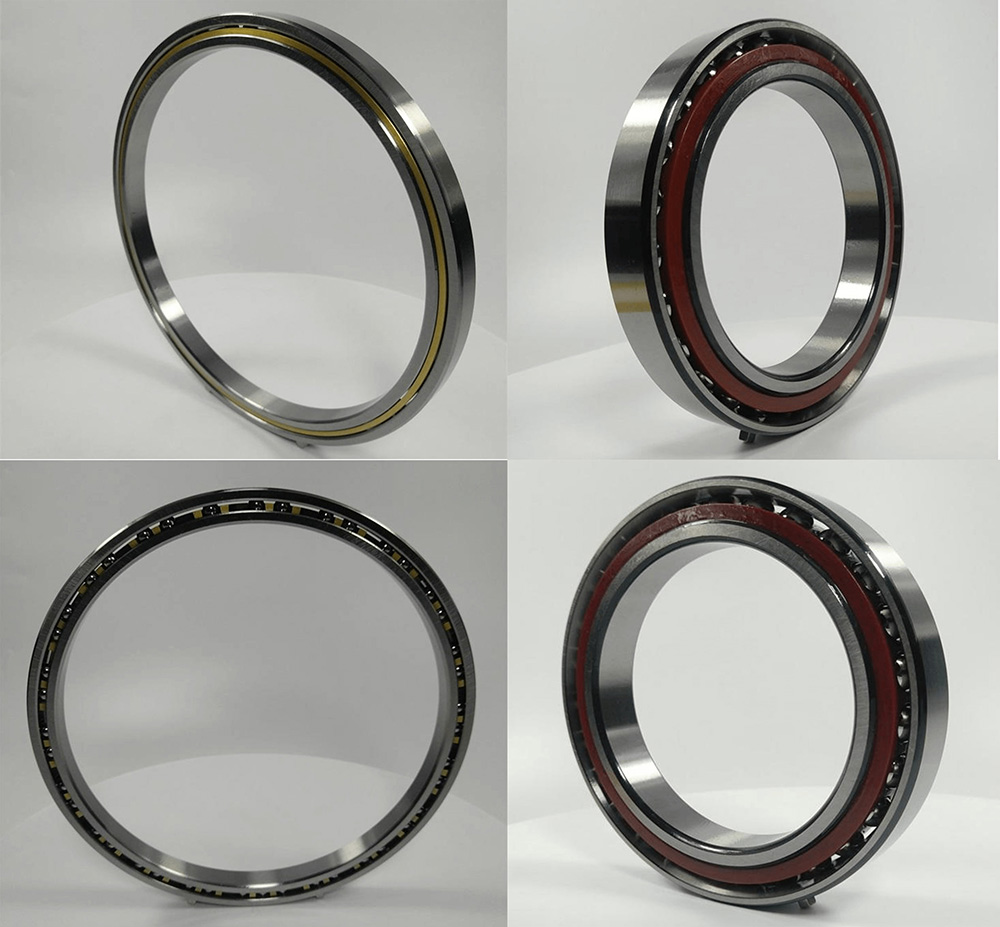
The above measures describe how to prevent heat treatment distortion in angular contact ball bearings. Distortion caused by heat treatment is not unavoidable; with appropriate preventive measures it can be effectively controlled, ensuring good appearance and performance of angular contact ball bearings. For further discussion of related process issues, please contact us.