News Center
Thin-Section Bearings: How Do They Help Make Modern Equipment Smaller and Lighter?
2026-08-21
Thin-Section Bearings: How Do They Help Make Modern Equipment Smaller and Lighter?
As modern machinery continues to become smaller, lighter, and more precise, engineers face a common challenge: how can equipment maintain reliable performance while using less space and weight?
Thin-section bearings provide an effective solution.
Unlike conventional bearings, thin-section bearings are designed with a relatively small cross-sectional size while maintaining reliable rotational support. This makes them particularly suitable for applications where installation space, weight, and precision are important considerations.
Today, thin-section bearings are widely used in robotics, medical equipment, optical instruments, automation systems, aerospace equipment, and other precision applications.
What Is a Thin-Section Bearing?
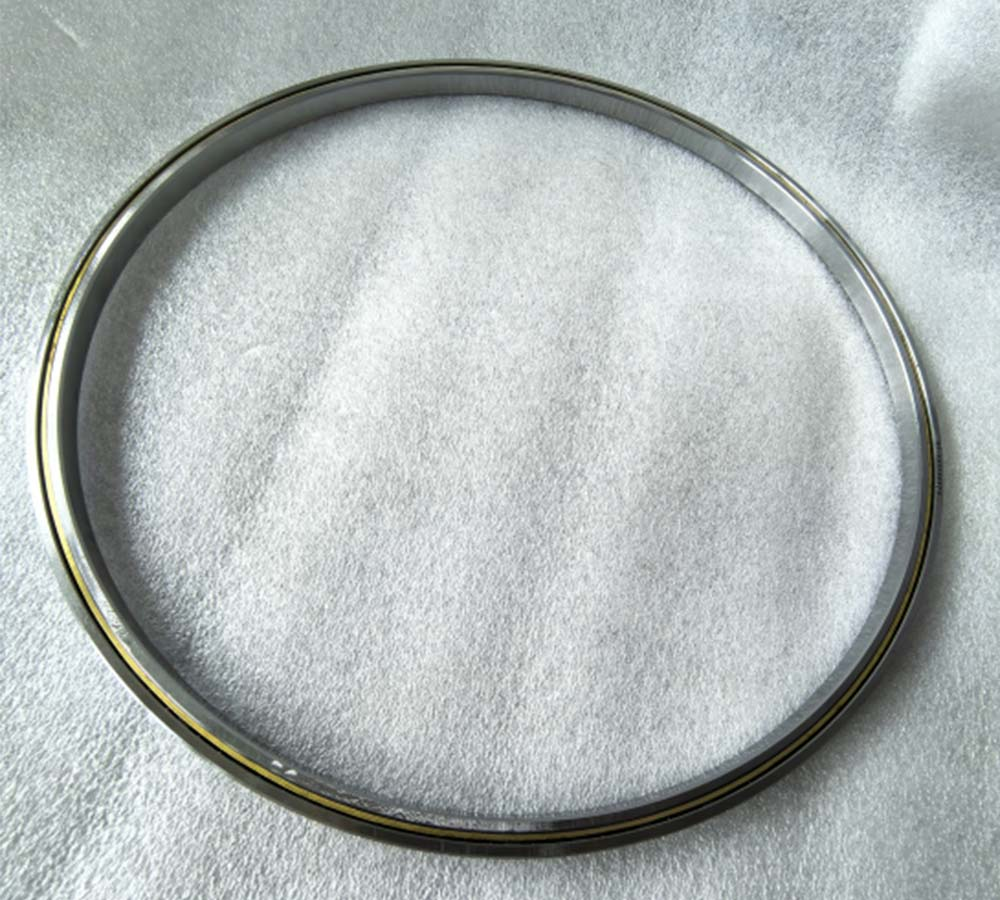
A thin-section bearing is a type of rolling bearing designed with a small and relatively constant cross-section compared with its bore diameter.
In conventional bearing designs, a larger bore diameter often means a larger bearing cross-section. Thin-section bearings are different: their compact cross-section allows engineers to accommodate a relatively large bore while keeping the overall bearing size and weight under control.
In simple terms, a thin-section bearing helps engineers achieve:
- Smaller equipment dimensions
- Lower overall weight
- More available installation space
- Flexible mechanical design
- Reliable rotational performance
This combination makes thin-section bearings especially valuable in compact and precision machinery.
Why Are Thin-Section Bearings Important?
1. They Save Installation Space
Space is often limited inside modern equipment.
For example, robotic joints, rotary tables, optical systems, and medical devices may need to accommodate bearings together with gears, sensors, motors, and other components.
A conventional bearing with a large cross-section may occupy valuable internal space. A thin-section bearing can provide the required rotational support while leaving more room for other components.
This allows engineers to develop more compact and integrated equipment.
2. They Help Reduce Weight
Reducing weight is another important advantage.
Thin-section bearings use a compact cross-sectional design, which can reduce the amount of material required compared with larger conventional bearing designs.
Lower bearing weight can contribute to overall equipment weight reduction, which is particularly valuable in robotics, aerospace, and other applications where every kilogram matters.
3. They Provide Greater Design Flexibility
Thin-section bearings can give engineers more freedom when designing mechanical structures.
The space saved around the bearing can be used for gears, sensors, seals, motors, or other components.
As a result, thin-section bearings are not simply "smaller bearings." They can actually enable a different approach to the design of the entire machine.
Are Thin-Section Bearings Suitable for Heavy Loads?
A common misconception is that a thin-section bearing is simply a weak bearing because its cross-section is small.
This is not necessarily true.
Different thin-section bearing designs are optimized for different types of loads. Depending on the design, a thin-section bearing can handle radial loads, axial loads, or combined loads.
However, the bearing must be selected according to the actual operating conditions.
When choosing a thin-section bearing, engineers should consider:
- Radial load
- Axial load
- Moment load
- Rotational speed
- Required service life
- Operating temperature
- Accuracy requirements
- Lubrication conditions
- Shaft and housing design
Therefore, a smaller cross-section does not automatically mean a lower-performance bearing. Proper bearing selection is the key.
Three Common Types of Thin-Section Ball Bearings
Thin-section ball bearings are commonly available in several designs. Three widely used configurations are C-type, A-type, and X-type.
C-Type: Radial Contact Bearing
C-type thin-section bearings are primarily designed for radial loads.
Their deep-groove design allows them to accommodate radial loads while also handling a certain amount of axial load.
They are suitable for many general-purpose applications where radial load is the main operating condition.
A-Type: Angular Contact Bearing
A-type thin-section bearings use an angular contact design.
They are suitable for applications involving significant axial loads or combined radial and axial loads.
When higher moment loads need to be supported, angular contact bearings may be used in matched pairs or other configurations depending on the application.
X-Type: Four-Point Contact Bearing
X-type thin-section bearings are also known as four-point contact bearings.
Their special raceway geometry allows the bearing to accommodate axial loads in both directions and provides good moment load capacity.
This makes X-type bearings particularly useful in applications where space is limited and the bearing needs to handle combined loading or overturning moments.
Where Are Thin-Section Bearings Used?
The compact design of thin-section bearings makes them suitable for a wide range of applications.
Typical applications include:
- Industrial robots and robotic joints
- Rotary tables
- Harmonic drive systems
- Medical equipment
- Optical and imaging equipment
- Radar and antenna systems
- Aerospace equipment
- Automation machinery
- Printing machinery
- Precision positioning systems
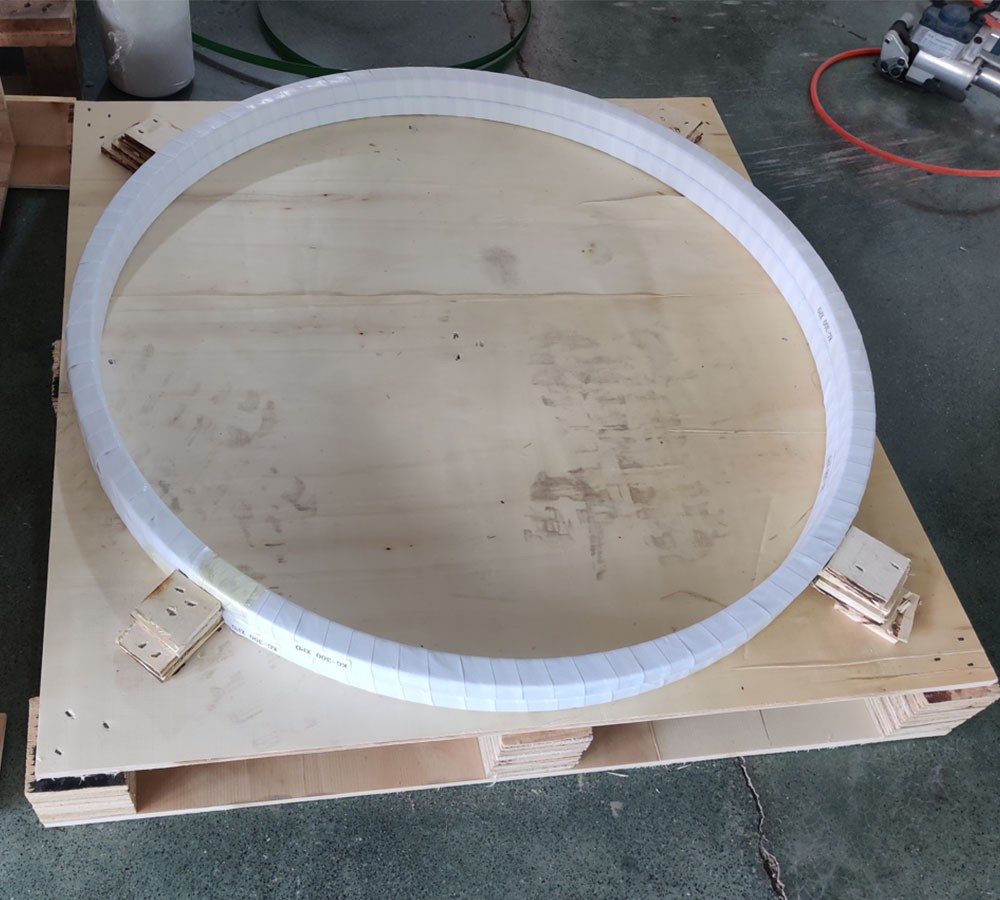
In many of these applications, the bearing is required to provide reliable rotation while occupying as little space as possible.
Thin-Section Bearings and the Future of Compact Machinery
The development of industrial robots, medical devices, automation systems, and aerospace equipment is driving demand for smaller and lighter mechanical components.
As a result, bearings are becoming more than simple components used to support rotating shafts.
Modern bearing designs increasingly focus on:
- Smaller installation space
- Lower weight
- Higher precision
- Better load capacity
- Improved stiffness
- Greater integration with other components
Thin-section bearings are well suited to this trend because their compact geometry allows engineers to make better use of limited internal space.
In some advanced applications, bearings can also be integrated into systems containing gears, encoders, sensors, and other components, helping create more compact and highly integrated mechanical assemblies.
Conclusion
The key advantage of a thin-section bearing can be summarized in one sentence:
It provides reliable rotational support while using less space and weight.
A thin-section bearing is not simply a smaller version of a conventional bearing. It is a bearing design developed around the requirements of compactness, lightweight construction, precision, and efficient use of space.
From industrial robots and medical equipment to optical systems and aerospace applications, thin-section bearings are playing an increasingly important role in modern engineering.
As machinery continues to become smaller, lighter, and more precise, thin-section bearings will remain an important solution for engineers looking to achieve more performance in less space.
As a professional bearing manufacturer, Shandong DSYC Bearing Co., Ltd. remains committed to delivering high-quality and reliable bearing solutions for automotive customers worldwide through continuous technological innovation and strict quality control.