News Center
Why Thin Section Bearing Precision Matters: A Comprehensive Guide to Bearing Accuracy
2026-06-26
Why Thin Section Bearing Precision Matters: A Comprehensive Guide to Bearing Accuracy
In high-end equipment such as industrial robots, medical devices, semiconductor manufacturing equipment, and aerospace systems, thin section bearings are valued not only for their compact design and lightweight construction, but also for their exceptional precision. Bearing accuracy has a direct impact on positioning performance, operational stability, vibration levels, and service life, making it one of the most critical factors when selecting a bearing.
What Is Thin Section Bearing Precision?
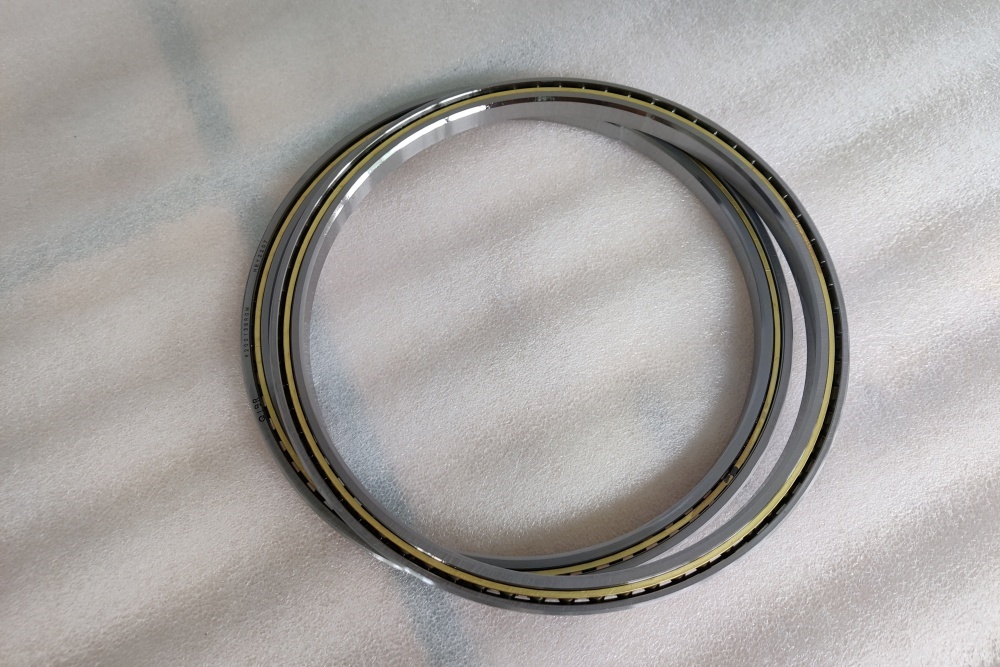
Thin section bearing precision refers to the manufacturing and running accuracy of a bearing, including dimensional accuracy, geometric accuracy, and rotational accuracy. The higher the precision, the smoother the bearing operates, with lower vibration and noise, resulting in improved positioning accuracy and repeatability.
Key Precision Parameters of Thin Section Bearings
1. Dimensional Accuracy
Dimensional accuracy includes:
- Bore diameter tolerance
- Outside diameter tolerance
- Width tolerance
High dimensional accuracy ensures a proper fit between the bearing, shaft, and housing, helping to maintain reliable performance and reduce installation errors.
2. Rotational Accuracy
Rotational accuracy is typically evaluated by:
- Inner ring radial runout
- Outer ring radial runout
- Axial runout
- Face runout
These parameters directly influence the smoothness of rotation and are particularly important for industrial robots, rotary tables, and precision measuring equipment.
3. Internal Clearance
Internal clearance refers to the amount of free movement between the rolling elements and the raceways.
Proper internal clearance helps to:
- Reduce friction
- Minimize heat generation
- Improve rotational accuracy
- Extend bearing service life
Different applications require different clearance classes to achieve optimal performance.
4. Surface Finish
The raceways and balls are precision-ground and superfinished to achieve a very low surface roughness, which helps to:
- Reduce operating noise
- Minimize vibration
- Improve high-speed performance
- Increase fatigue life
Common Bearing Precision Grades
Internationally, rolling bearing precision grades generally include:
P0 (Normal Precision)
P6 (Higher Precision)
P5 (High Precision)
P4 (Precision Grade)
P2 (Ultra-Precision Grade)
The smaller the grade number, the higher the bearing precision.
Typical applications include:
P6 or P5 for automation equipment
P5 or P4 for industrial robots and precision rotary tables
P4 or P2 for semiconductor equipment, aerospace applications, and high-end inspection systems
Benefits of High-Precision Thin Section Bearings
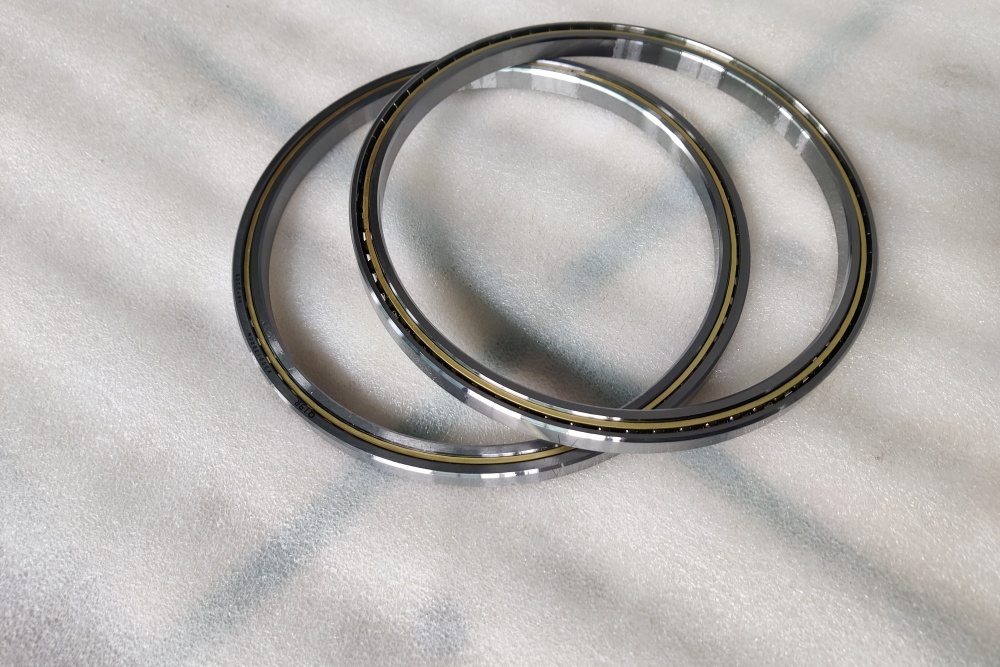
High-precision thin section bearings offer several important advantages:
- Higher positioning accuracy
- Reduced rotational error
- Lower operating noise
- Reduced vibration
- Improved high-speed capability
- Longer service life
- Excellent repeatability
These advantages make them the preferred choice for equipment requiring outstanding motion control and positioning performance.
How Is High Precision Achieved?
Manufacturing high-precision thin section bearings requires strict process control throughout production, including:
- Premium-quality bearing steel
- CNC precision machining
- Optimized heat treatment
- Precision grinding
- Superfinishing
- Precision assembly
- Comprehensive dimensional inspection
- Rotational accuracy testing
- Clean-room assembly and contamination control
Each manufacturing step contributes to the final accuracy, reliability, and long-term performance of the bearing.
Conclusion
As intelligent manufacturing and high-end equipment continue to evolve, thin section bearings must deliver more than just compact dimensions and lightweight design. They are expected to provide exceptional precision, superior stability, and extended service life. Selecting the appropriate precision grade, combined with proper installation and lubrication, ensures optimal bearing performance and enhances the overall reliability of the equipment.
When purchasing bearings, you may wish to consult us and choose the best cost-effective product based on actual needs.